STOL UAV Design & Flight Testing – National First Prize, CUADC
An evidence-backed engineering case study of three aircraft generations developed for short-takeoff payload flight.
Design Challenge
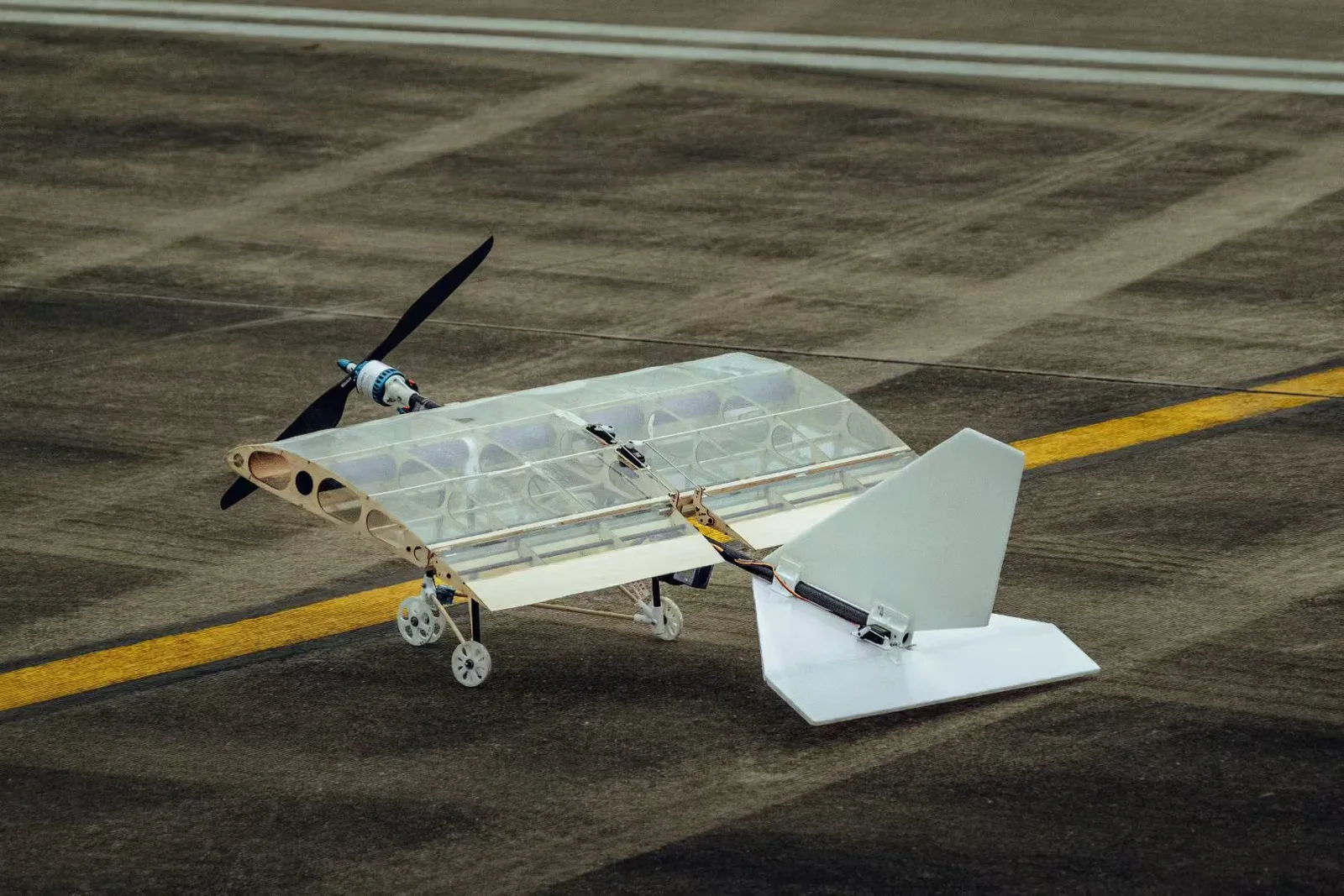
The team developed a fixed-wing aircraft for the short-takeoff payload event at the China Universities Aircraft Design Competition. The engineering problem coupled low-speed lift, propulsion, structural mass, manufacturability, ground handling, and reliable flight within a compact airframe. Three physical generations were used to move from a high-lift baseline through rapid validation to the final lightweight aircraft.
Key Results
- 770 mmwingspanFinal competition aircraft
- 905 gaircraft massExcluding competition payload
- 2.845 kgcompetition payloadCarried in the final event
- 2.4 mshort-takeoff distanceGround run to takeoff
My Contributions
- Co-developed the 770 mm-span short-takeoff aircraft at 905 g unladen mass; the final airframe carried a 2.845 kg payload and took off within 2.4 m in competition testing.
- Contributed to the iteration from a single-propeller triplane through a gearbox-driven twin-propeller prototype to the lighter single-propeller monoplane, assessing lift, drivetrain complexity, and structural mass under the single-motor rule.
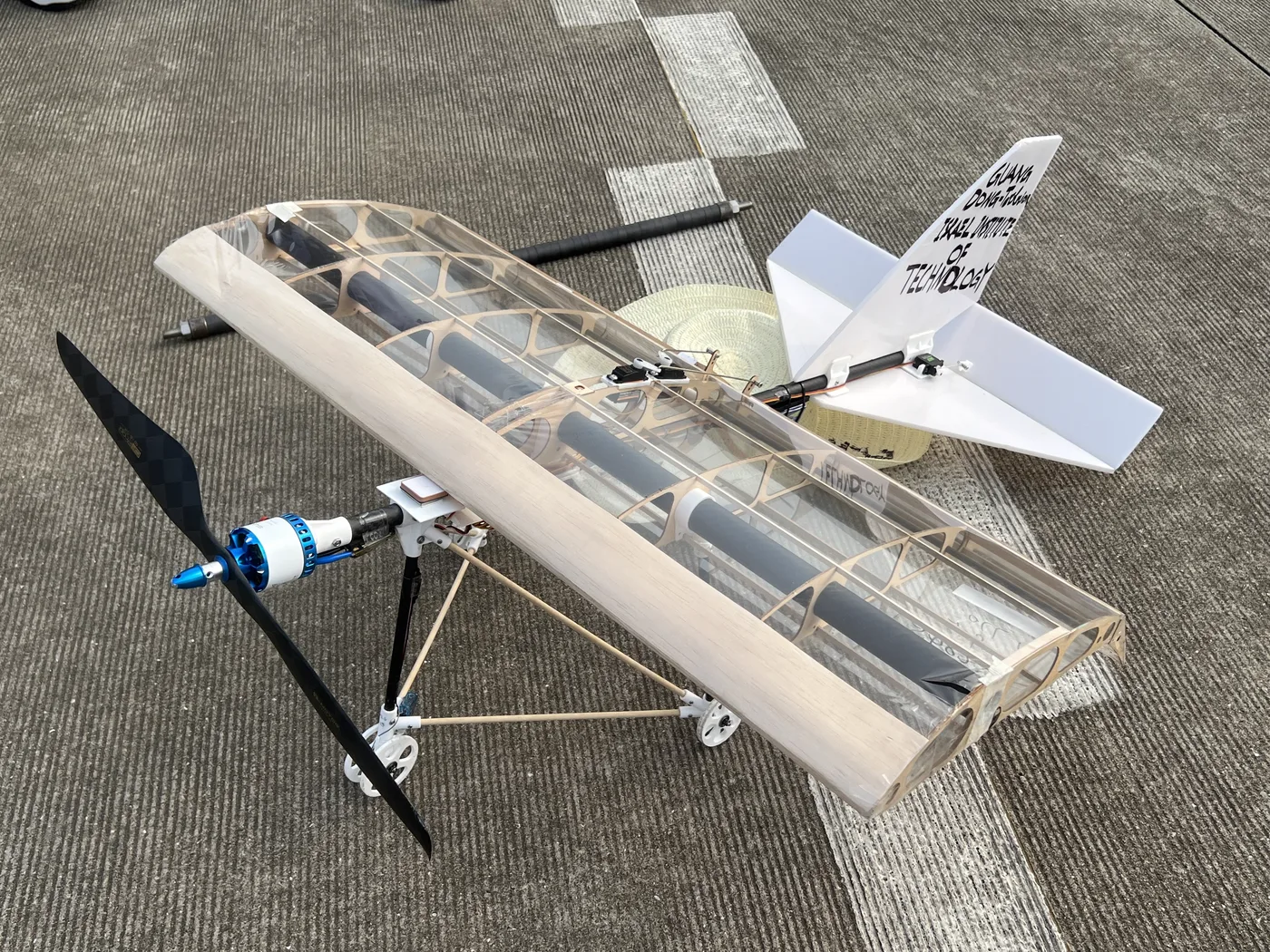
- Modeled the airframe in SolidWorks and redesigned the final MH114 wing with balsa/basswood members, a carbon-fiber main spar, 3D-printed connectors, and heat-shrink covering.
- Integrated the payload directly along the main spar to eliminate a separate support structure and increase roll moment of inertia, reducing sensitivity to transient roll disturbances; participated in fabrication, ground checks, and flight testing.
Design Evolution
Stacked triple-wing baseline
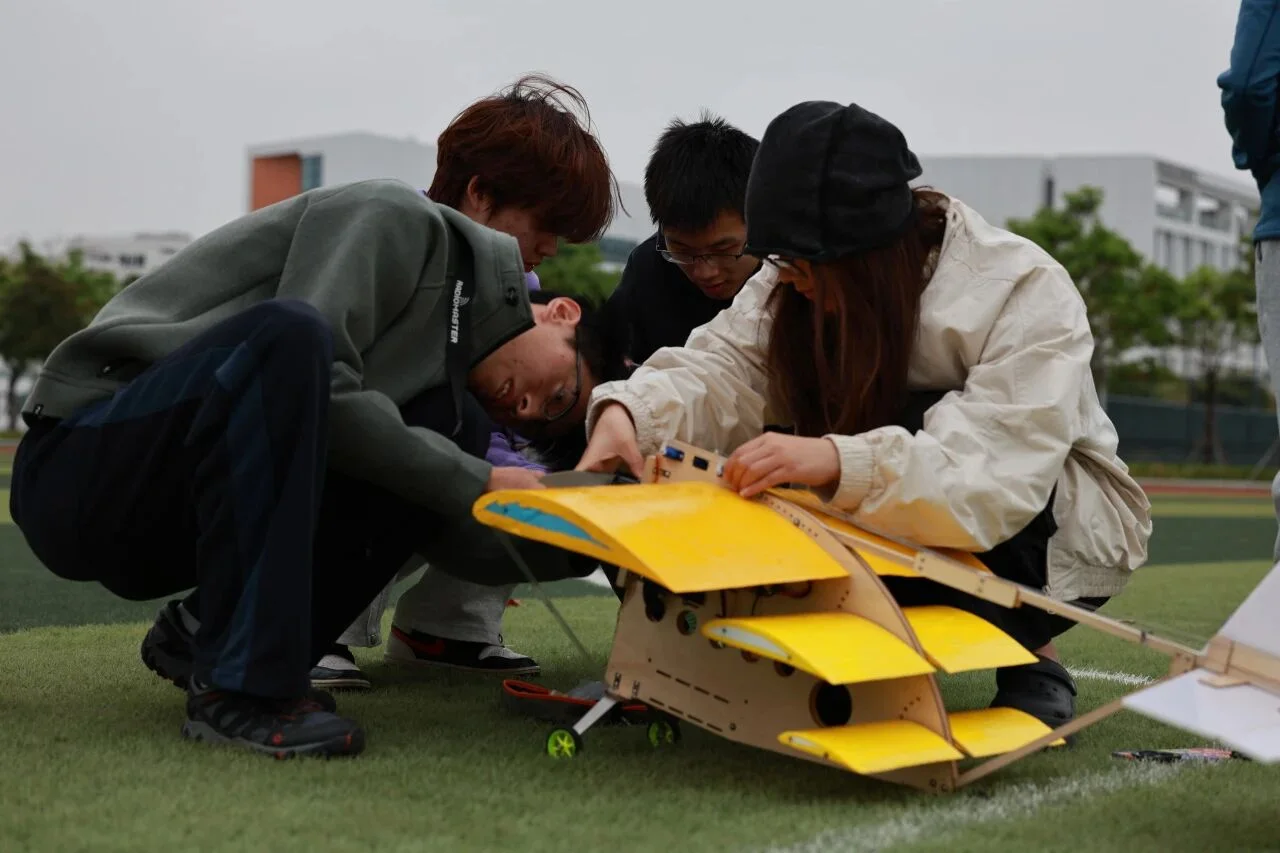
The first airframe explored a compact, stacked triple-wing arrangement before the team reduced mass and complexity in later prototypes.
Single-motor dual-propeller reduction-drive prototype
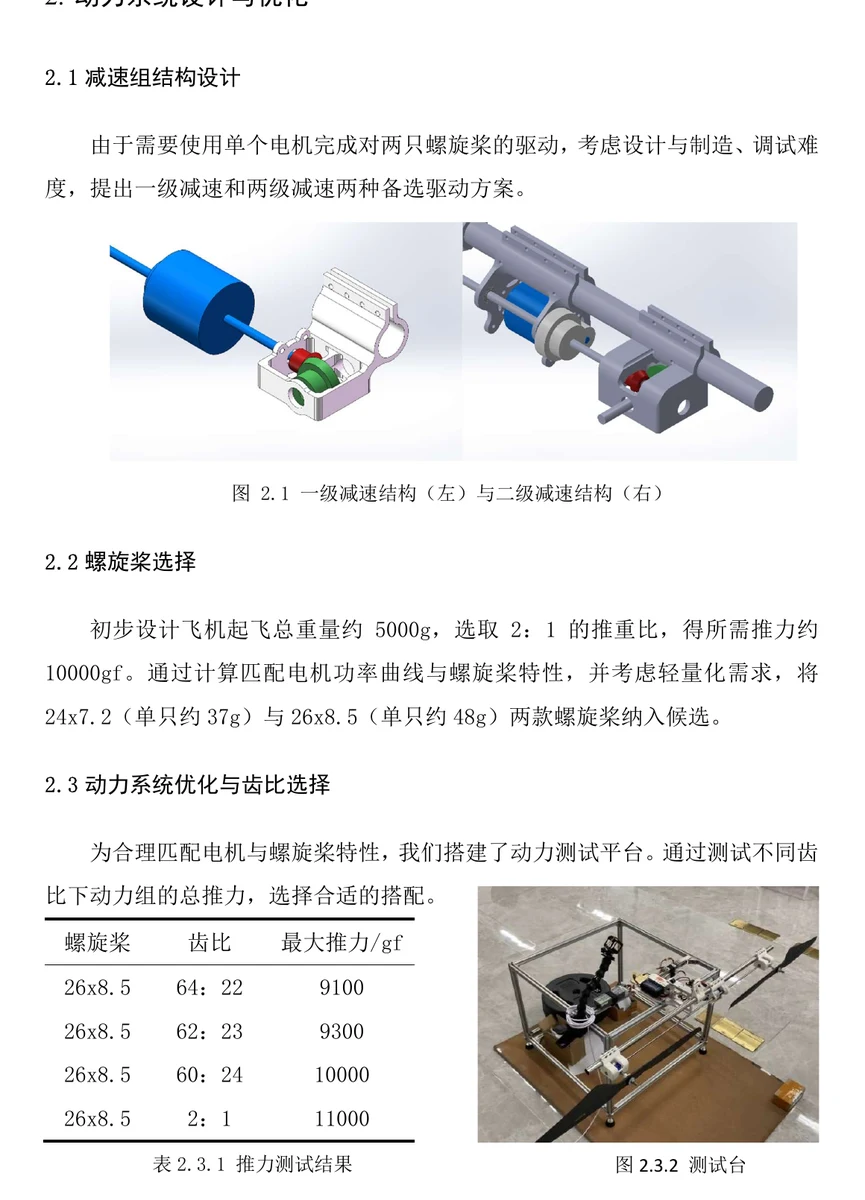
The Generation II study retained a stacked three-wing concept while examining a single motor coupled to two propellers to reduce reaction torque and improve propeller efficiency.
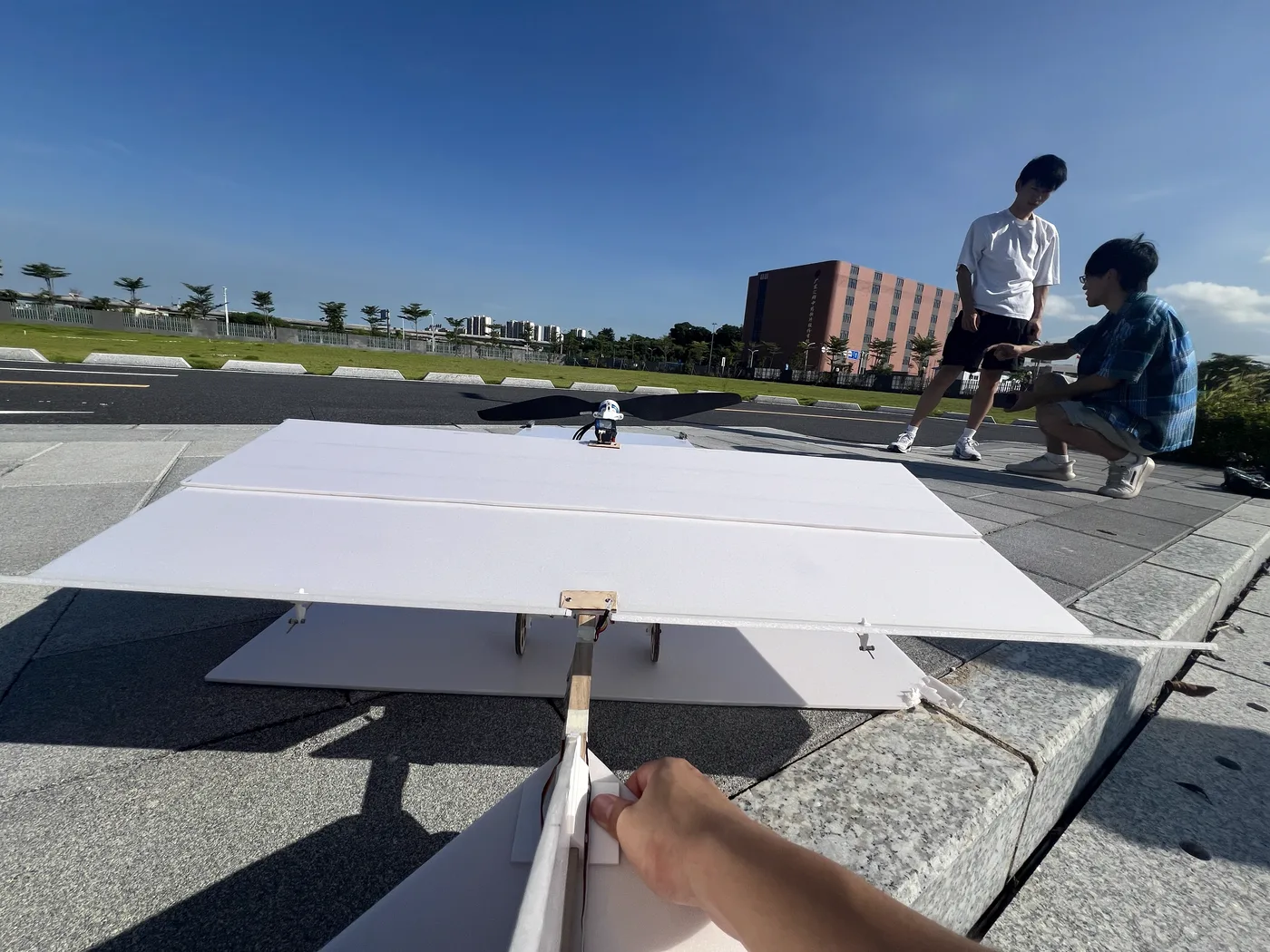
Lightweight single-wing validation prototype
Engineering Deep Dive
Generation II propulsion study
The Generation II bench study compared four reduction ratios with 26×8.5 propellers. The report records 64:22 = 9.1 kgf, 62:23 = 9.3 kgf, 60:24 = 10.0 kgf, and 2:1 = 11.0 kgf total static thrust. The team selected the one-stage 2:1 arrangement for that design because it combined the largest measured value with a simpler, lighter mechanism.
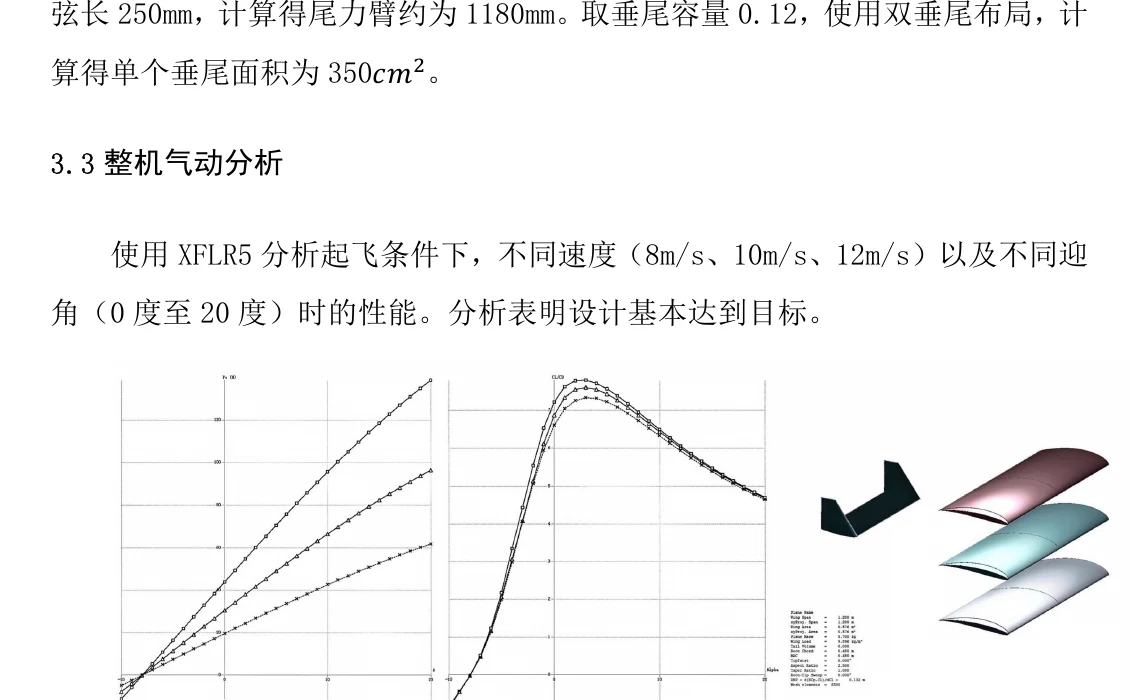
Generation II aerodynamic analysis
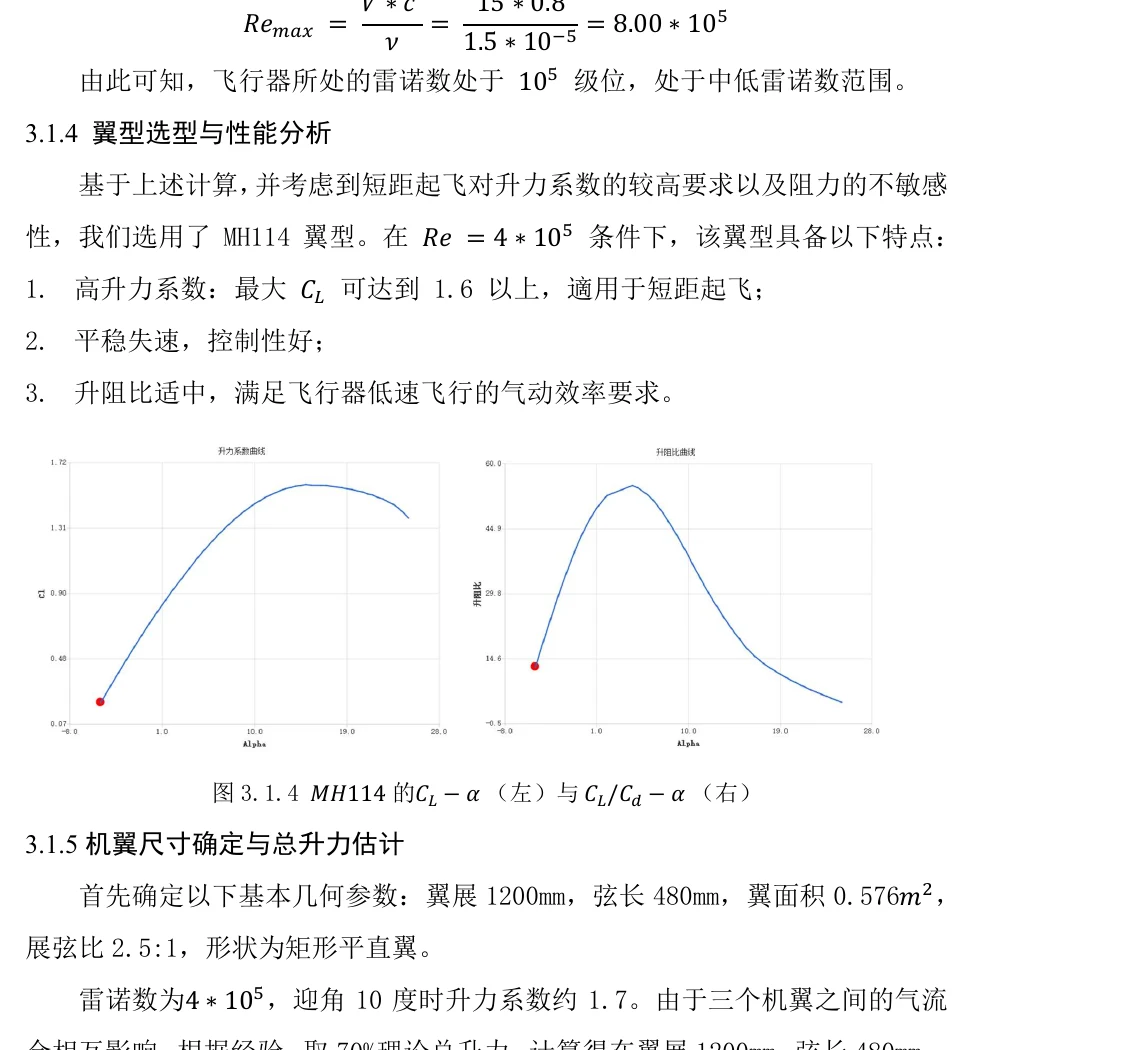
These aerodynamic results apply only to Generation II. Its report selected the MH114 airfoil for low-speed lift and described XFLR5 analysis at 8, 10, and 12 m/s over angles of attack from 0° to 20°. They are design-study evidence, not measured aerodynamic coefficients for the final competition aircraft.
Lightweight structure and fabrication
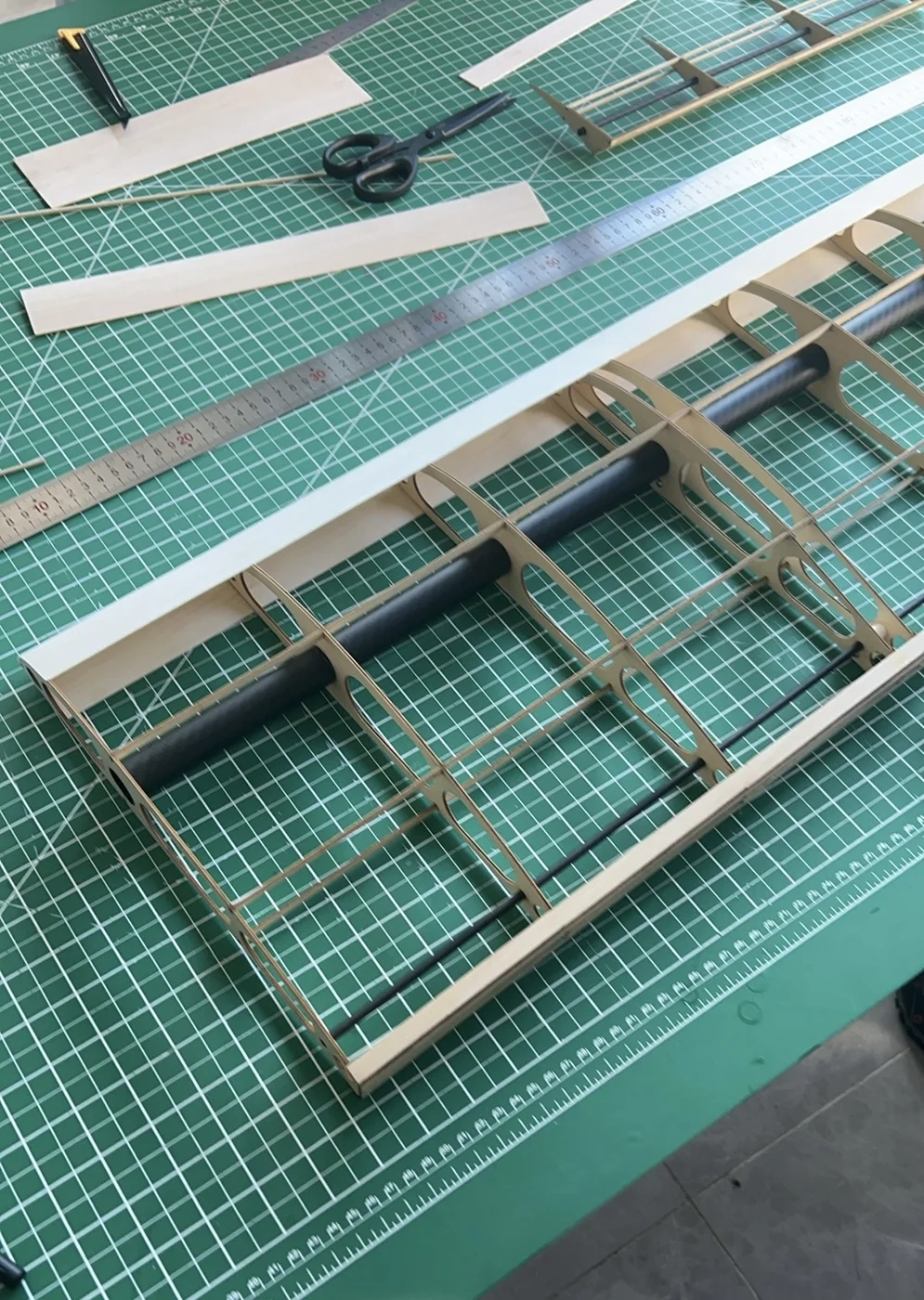
The later airframe combined a built-up wing skeleton, lightweight skin, carbon members, and small fabricated joints. Structural work in SolidWorks was followed by fabrication, alignment, covering, integration, and repeated ground checks so that mass reduction did not erase assembly accuracy.
Flight-Test Progression
The development flights below document two distinct configurations. They show progression in the physical prototypes; they are not interchangeable performance trials.
Twin-propeller triplane test
Development-flight evidence for the twin-propeller stacked-wing configuration. Watch the twin-propeller triplane test on YouTube.
Lightweight monoplane test
Development-flight evidence for the lightweight single-wing configuration. Watch the lightweight monoplane test on YouTube.
Final Competition Flight
The final competition aircraft combined the lightweight airframe with the integrated propulsion and control system. The recorded result was a 2.4 m short-takeoff ground run while carrying the 2.845 kg competition payload.
Final competition flight
Competition-flight record for the final aircraft. The 2.4 m value is the short-takeoff distance. Watch the final competition flight on YouTube.
Awards and Team
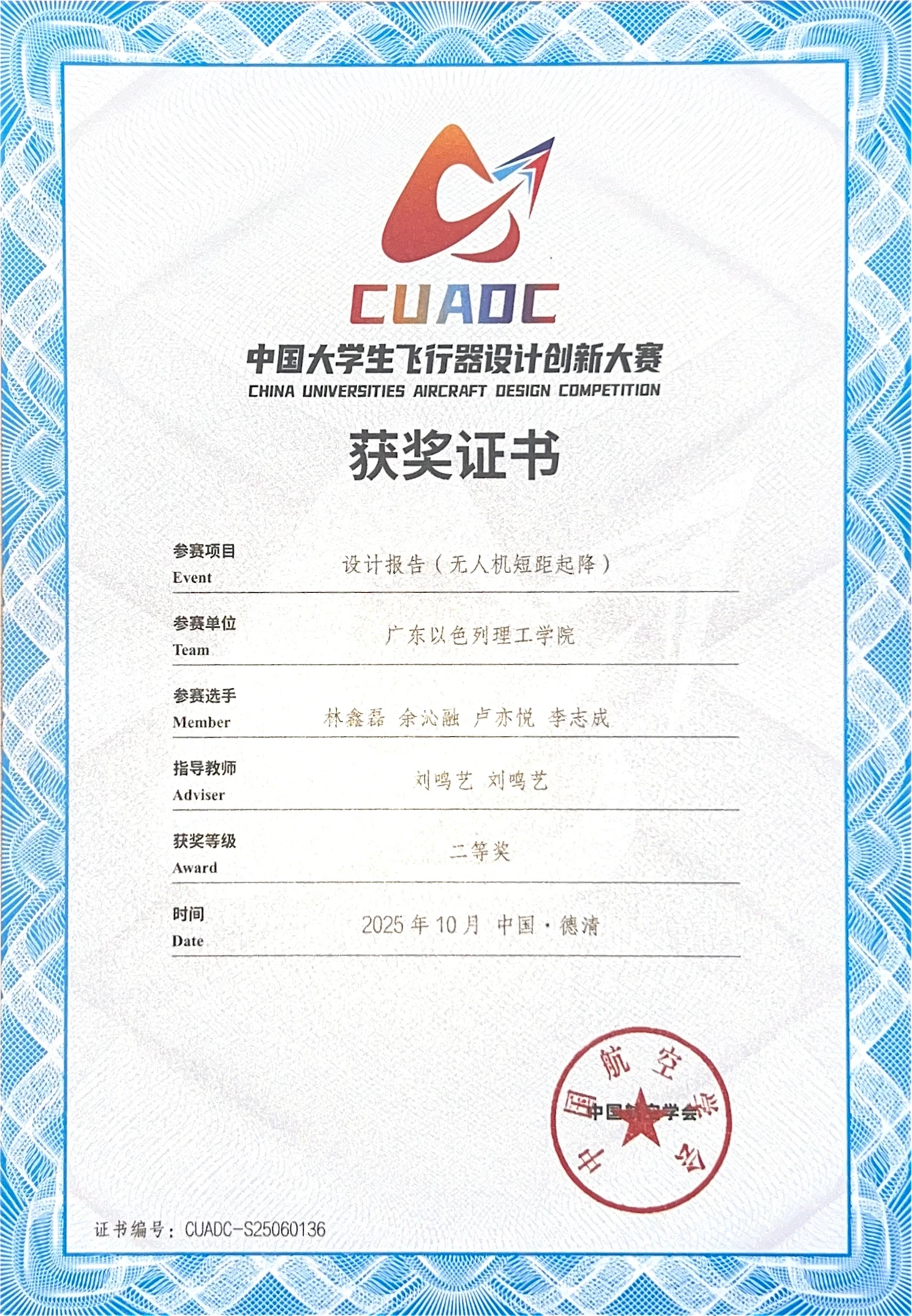
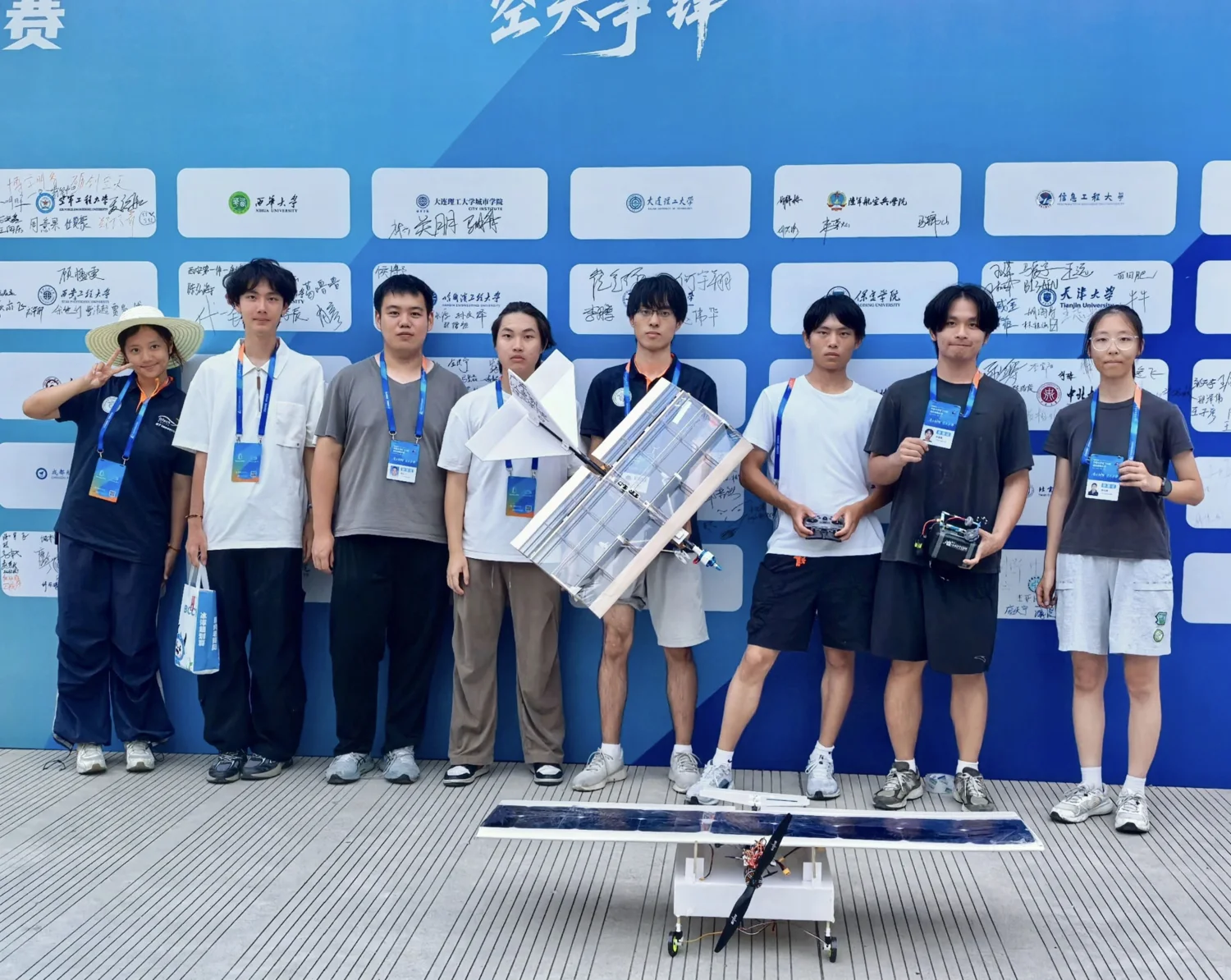
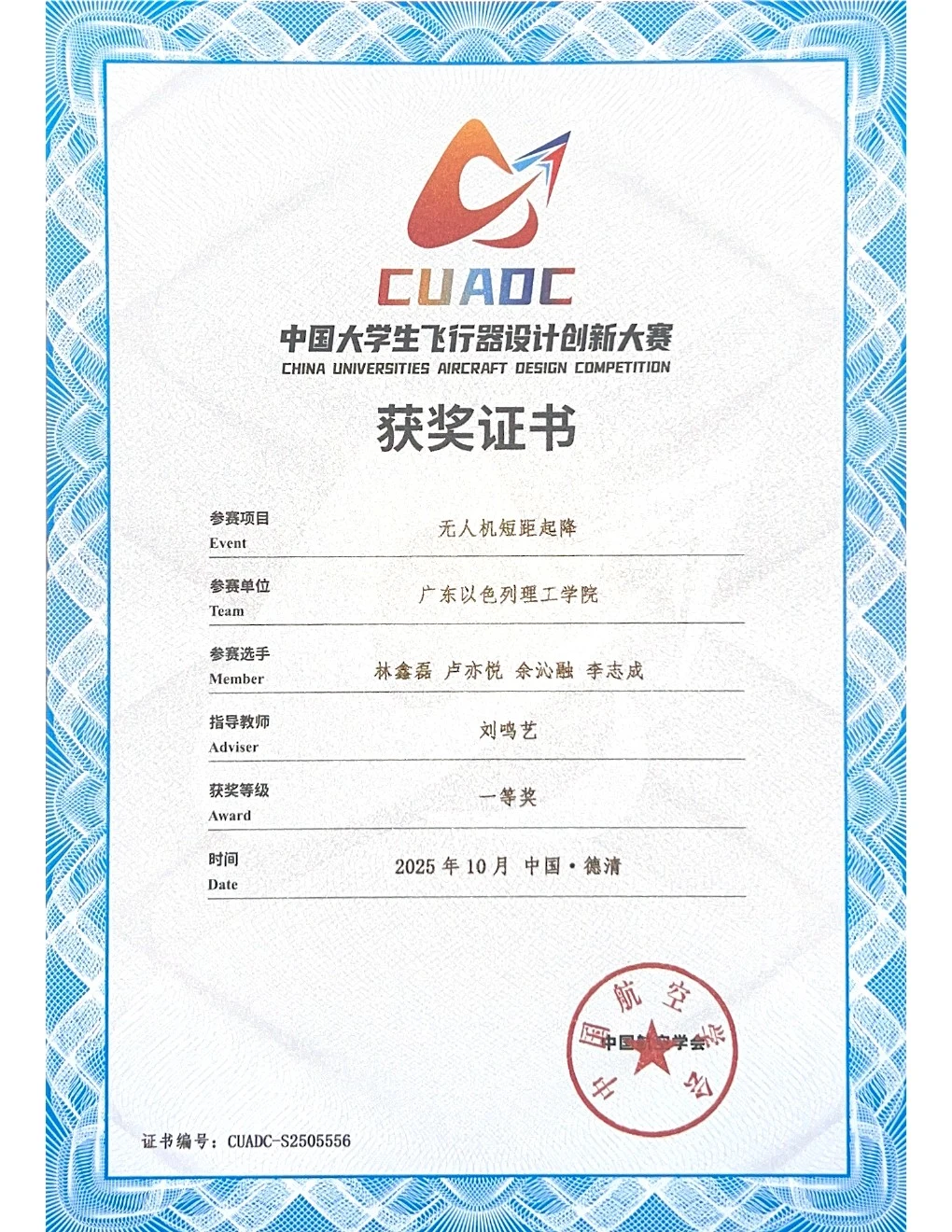
The China Universities Aircraft Design Competition issued separate awards for the flight event and its design report. The full certificates are shown without redaction so the event, team, members, adviser, award level, date, and certificate number remain visible.
STOL UAV First Prize
STOL UAV Design Report Second Prize