Mobile Robot Navigation & Control
ROS 2 / Nav2 research platform for dynamic-obstacle navigation
Dynamic Navigation · Predictive Occupancy · MPPI · Embedded Control
Research Assistant · Prof. Mingyi Liu · GTIIT
Sep. 2026 – Present
Can short-horizon occupancy prediction help a robot navigate around moving obstacles when predictions are uncertain, stale, and imperfect?
I built a ROS 2/Gazebo testbed for the omnidirectional ROSMASTER M1 to investigate this question, separating predictive accuracy from downstream navigation outcomes. The platform connects local guidance and Nav2 MPPI to controlled evaluation; a parallel STM32/FreeRTOS workstream addresses low-level motion control.
My Contributions
- Built the ROS 2/Gazebo navigation and controlled-evaluation platform for an omnidirectional M1 robot.
- Developed the Nav2 controller wrapper combining kinodynamic A* local guides, MPPI, asynchronous replanning, and global-plan fallback.
- Integrated a frozen pretrained occupancy predictor through a custom C++ local-costmap layer and designed rosbag and prediction-on/off evaluations.
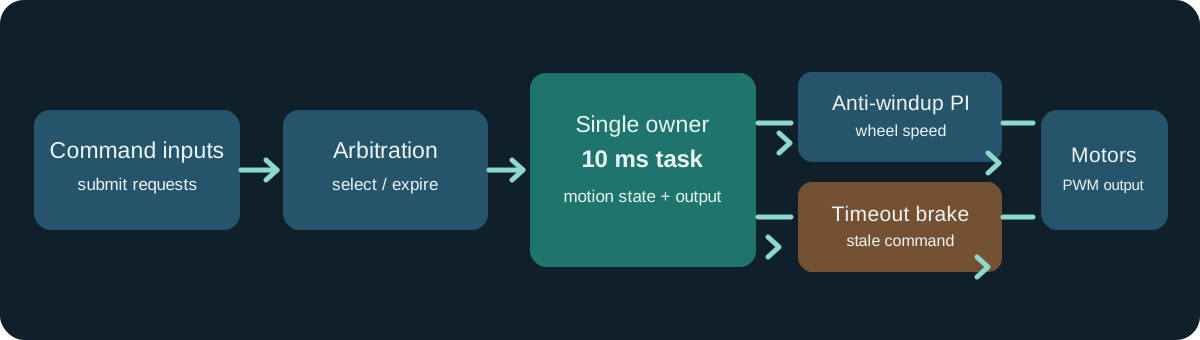
- Refactored STM32/FreeRTOS motion control into a single 10 ms owner task with command arbitration, timeout braking, and optional anti-windup wheel-speed PI.
System Architecture
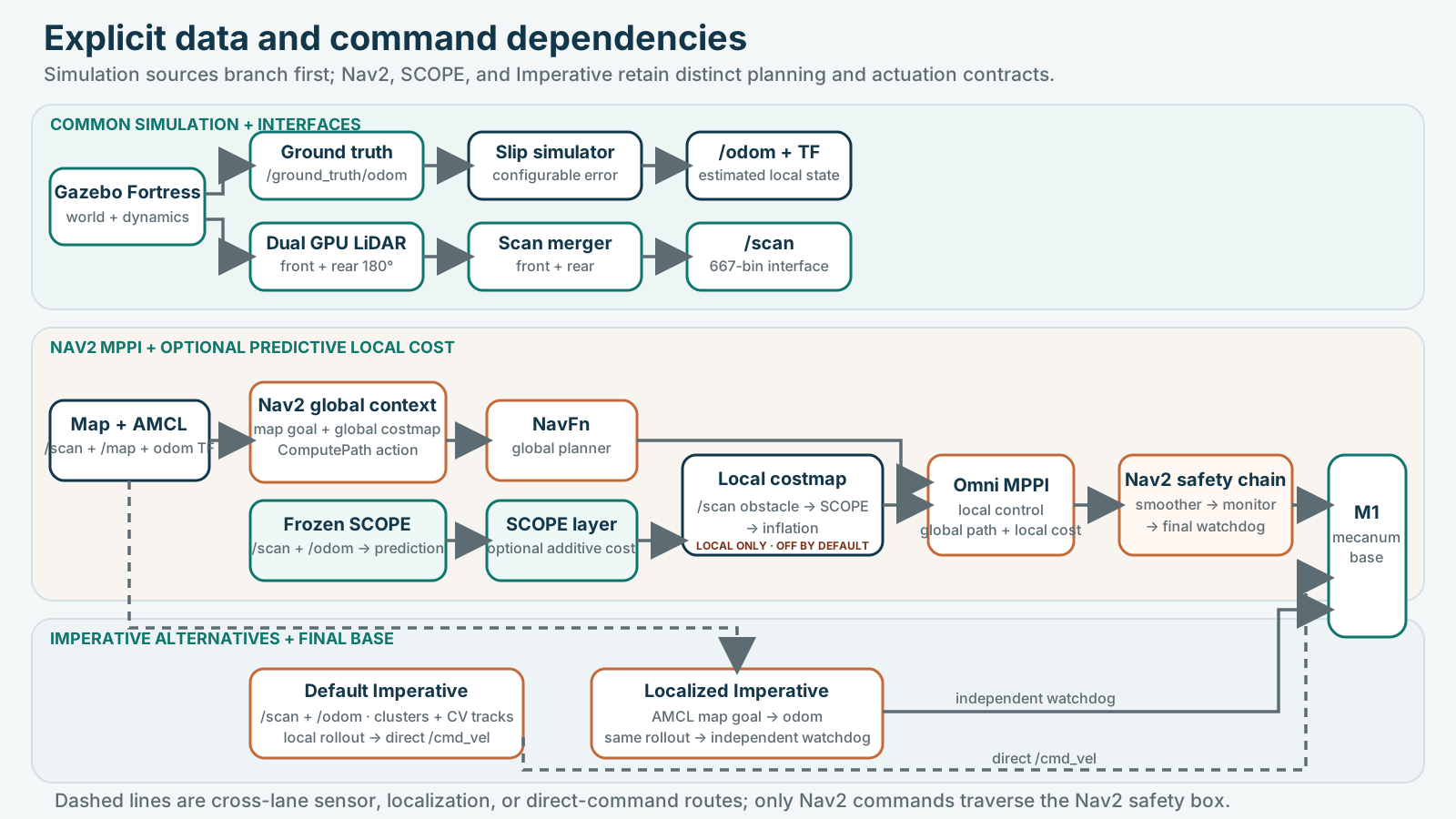
NavFn supplies the global path. When the hybrid controller is enabled, a worker asynchronously generates kinodynamic local guides from a local-costmap snapshot; MPPI tracks the accepted guide, with a global-plan fallback if no fresh guide is available. The wrapper is optional: the default configuration retains native MPPI.
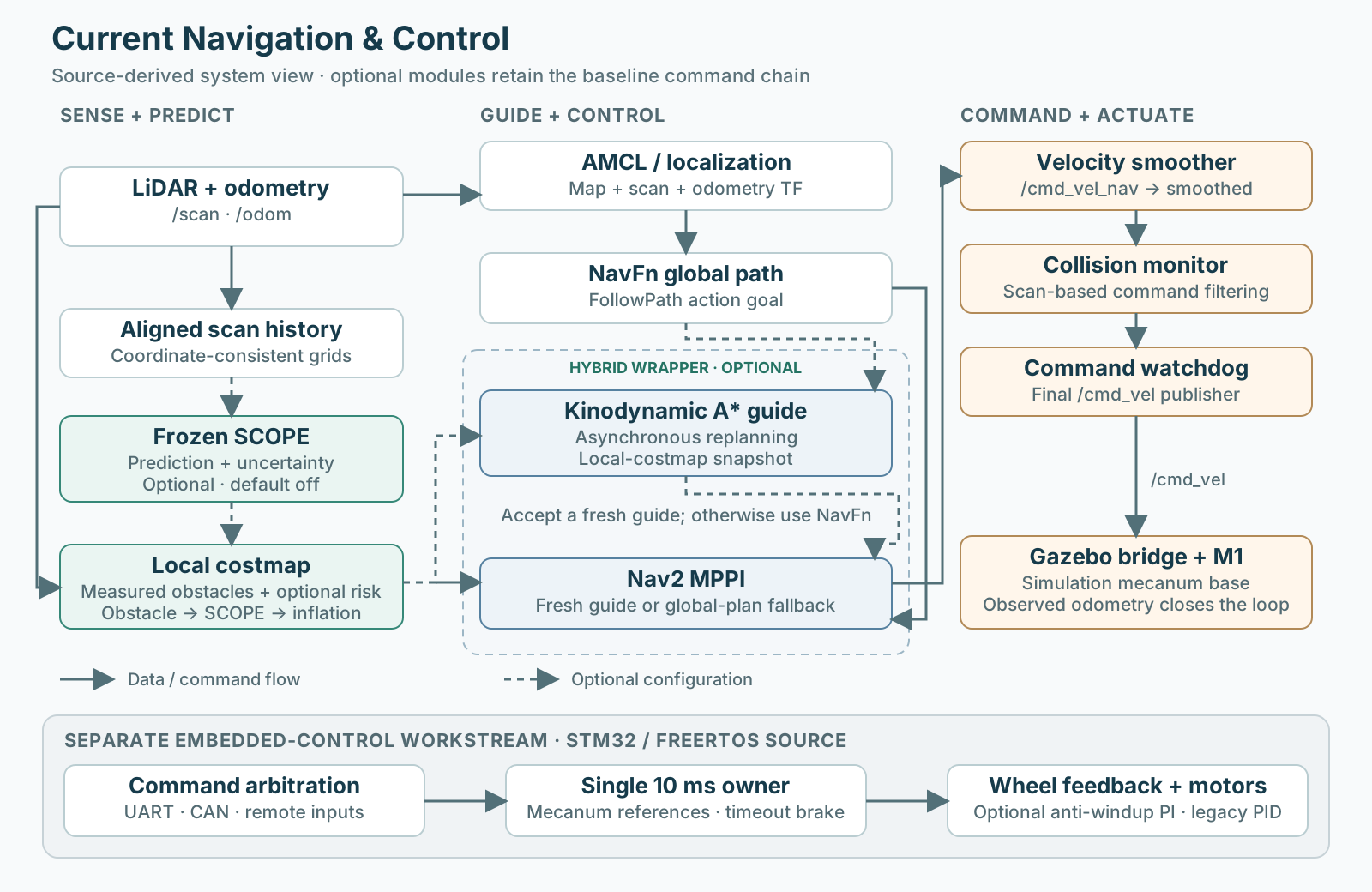
Measured obstacles and optional SCOPE costs feed the local costmap used by guidance and control. Navigation commands pass through the velocity smoother, collision monitor, and final watchdog before reaching the Gazebo base. Planning, prediction, and final command authority therefore remain inspectable at separate interfaces.
Predictive Occupancy
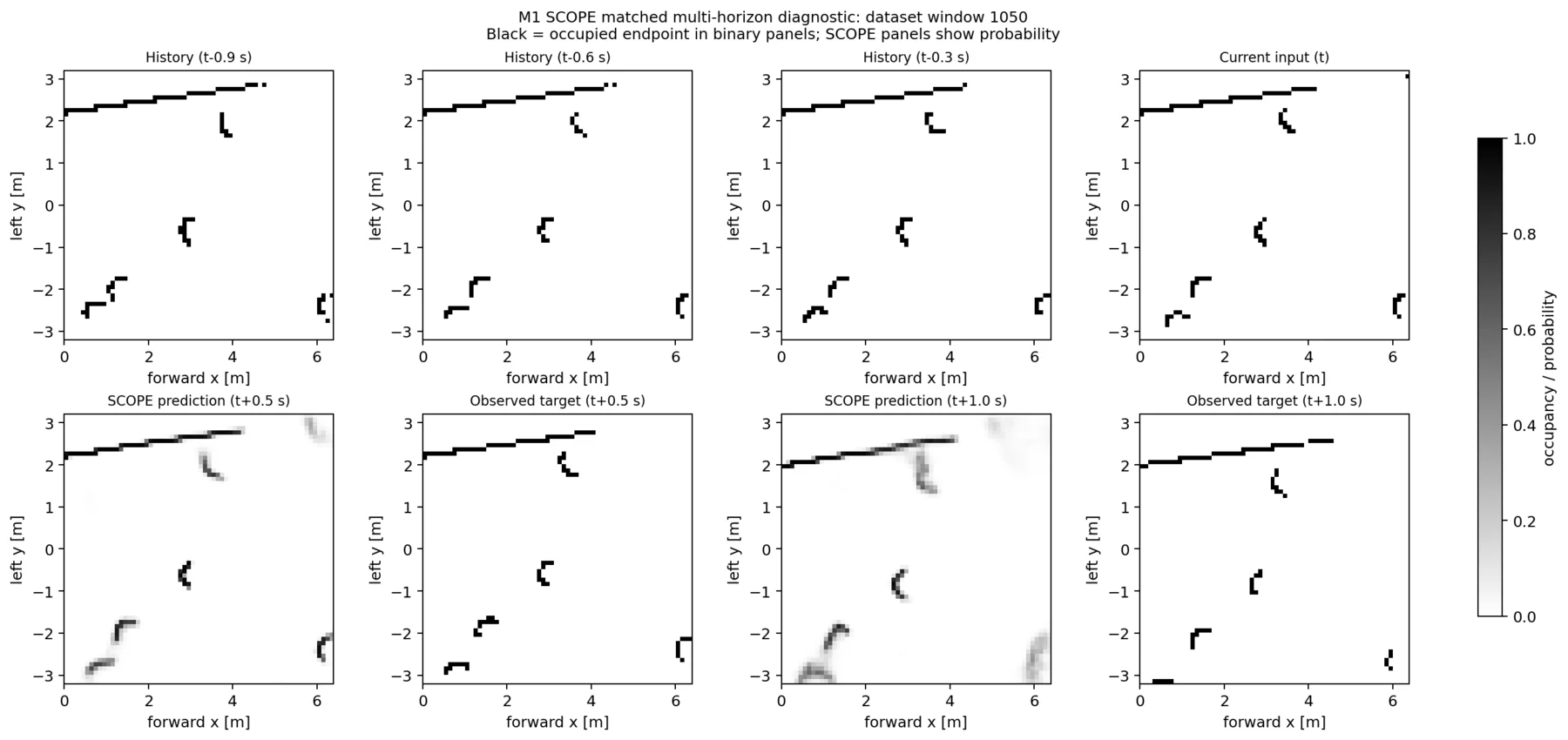
SCOPE predicts occupancy from aligned scan history and odometry. I reproduced, integrated, and evaluated a frozen pretrained checkpoint; I did not author or retrain the model. A custom C++ Nav2 layer adds uncertainty-aware, coordinate-consistent prediction costs to the local costmap without clearing measured obstacles. Stale outputs withdraw only the prediction layer’s contribution. The integration remains off by default.
| Method | Whole grid | Dynamic ROI |
|---|---|---|
| SCOPE | 0.500 | 0.202 |
| copy-last | 0.589 | 0.177 |
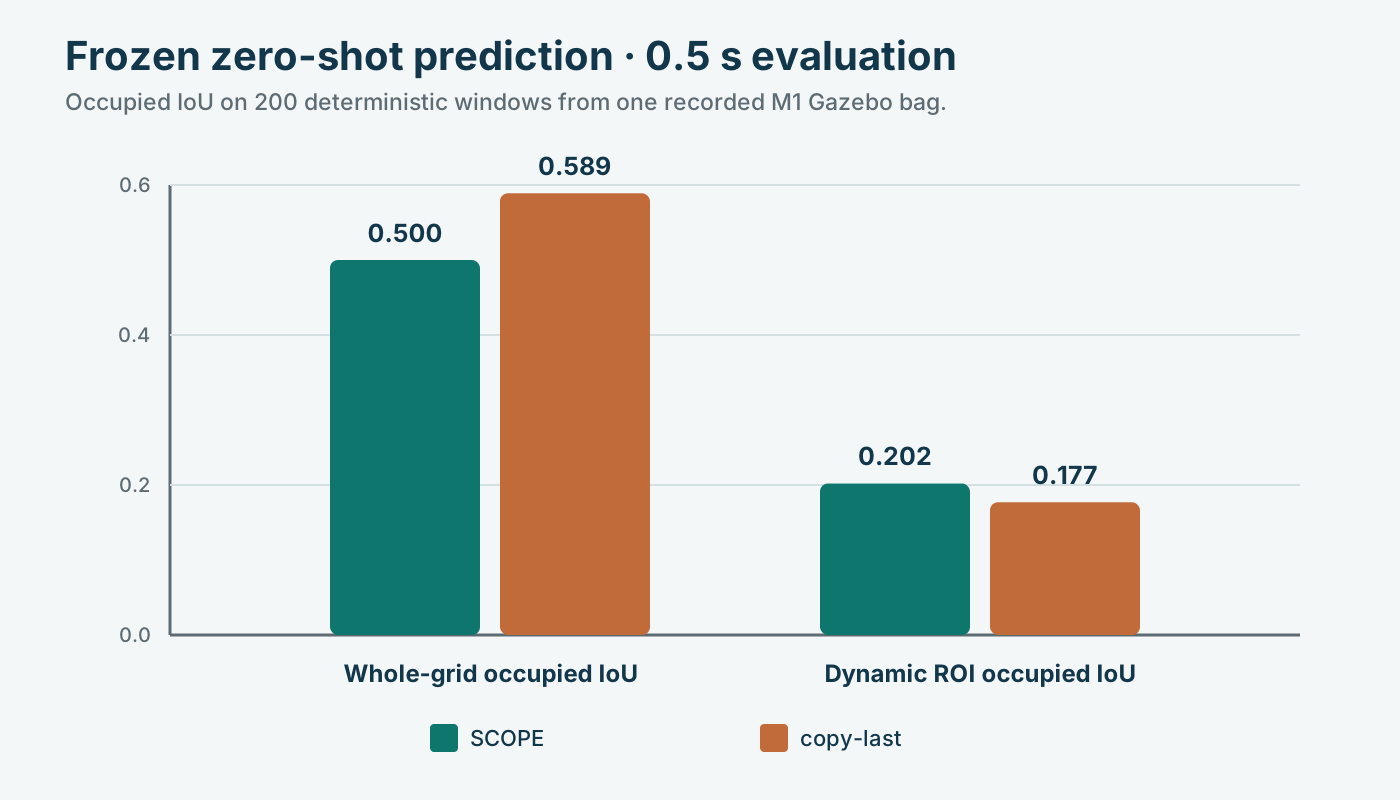
The localized advantage disappears at 1.0 s: dynamic-ROI occupied IoU is 0.061 for SCOPE versus 0.079 for copy-last. The results favor evaluating prediction by both region and horizon before using it in control.
Local-costmap integration details
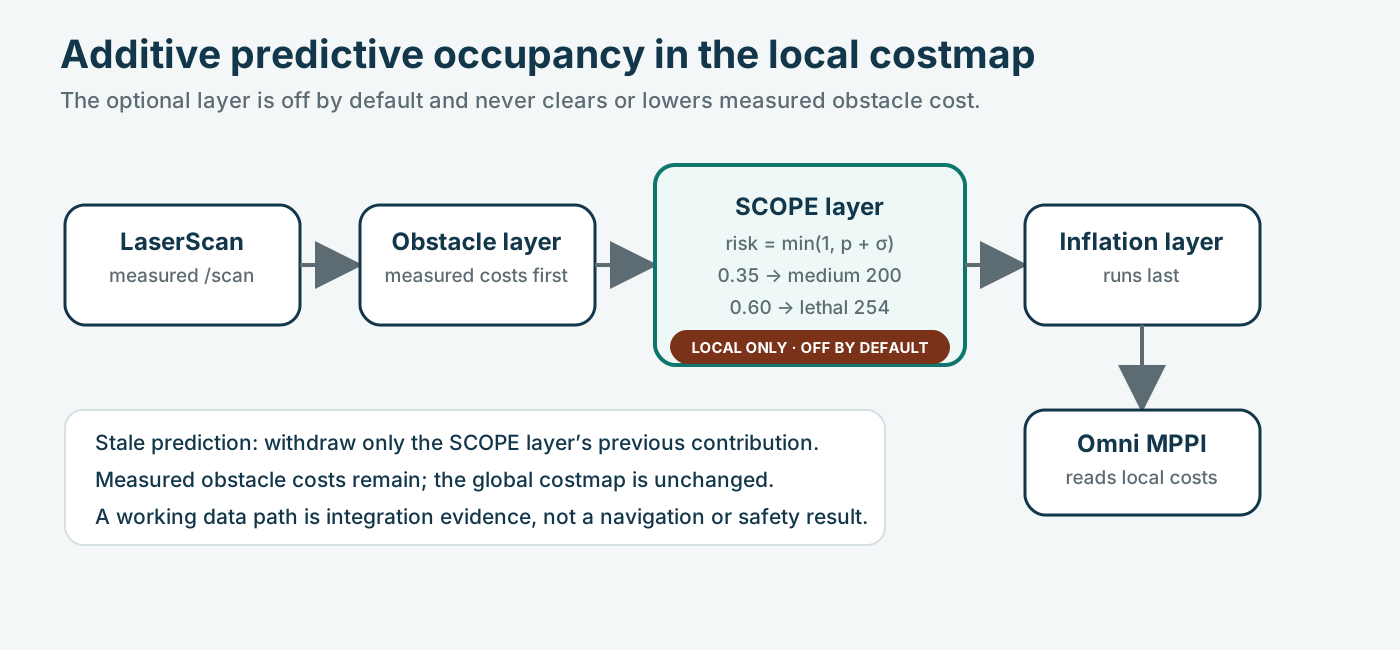
The online entry uses ten 10 Hz history frames and a 0.5 s horizon. Paired prediction and uncertainty grids must share their timestamp and geometry. Full fusion thresholds and expiry behavior are documented in the integration specification ↗.
Closed-Loop Evaluation
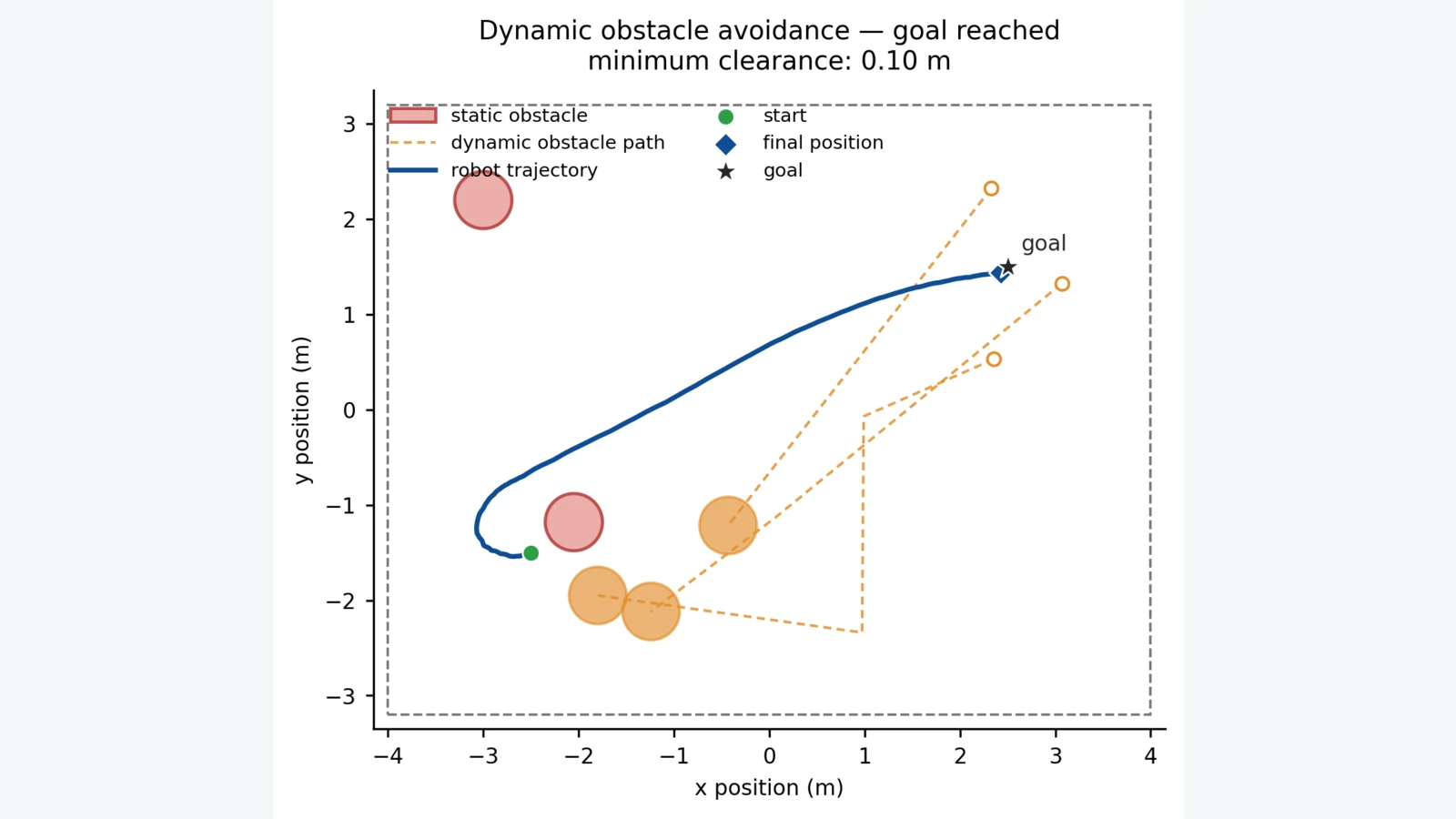
The next question is whether prediction improves navigation. I compared prediction-on and prediction-off runs with the same seed, start, and goal, keeping bag-based accuracy separate from the navigation outcome.
SCOPE off
6.855 s to complete the goal, with zero recoveries.
SCOPE on
Timeout · 20 recoveries under the enabled risk-layer configuration.
In this single fixed-seed trial pair, the enabled layer added persistent high-cost regions while MPPI repeatedly failed to find an executable trajectory. Excessive risk costs followed by inflation are a plausible explanation for the lost feasible space, motivating a fusion-policy ablation. This is a hypothesis from the recorded behavior, not an isolated causal result.
These historical SCOPE comparisons predate the hybrid controller and evaluate the earlier Nav2 MPPI configuration. They are not a benchmark of the architecture’s newer local-guidance path.
From Navigation Commands to Wheel Control
High-level navigation and low-level actuation have different timing and ownership requirements. In the vendor STM32/FreeRTOS firmware, I assigned motion state and motor-output ownership to a single 10 ms task so asynchronous UART, CAN, and remote-control handlers submit commands through one arbitration boundary.
The owner selects the active command, converts body motion into mecanum wheel references, and applies timeout braking when commands expire. I added an optional anti-windup PI wheel-speed loop; the default retains legacy PID. This structure makes command selection, feedback, saturation, and braking part of one periodic control path.
Engineering Diagnostics
LiDAR renderer failure isolation · command-authority tracing · odometry slip
LiDAR failure isolation
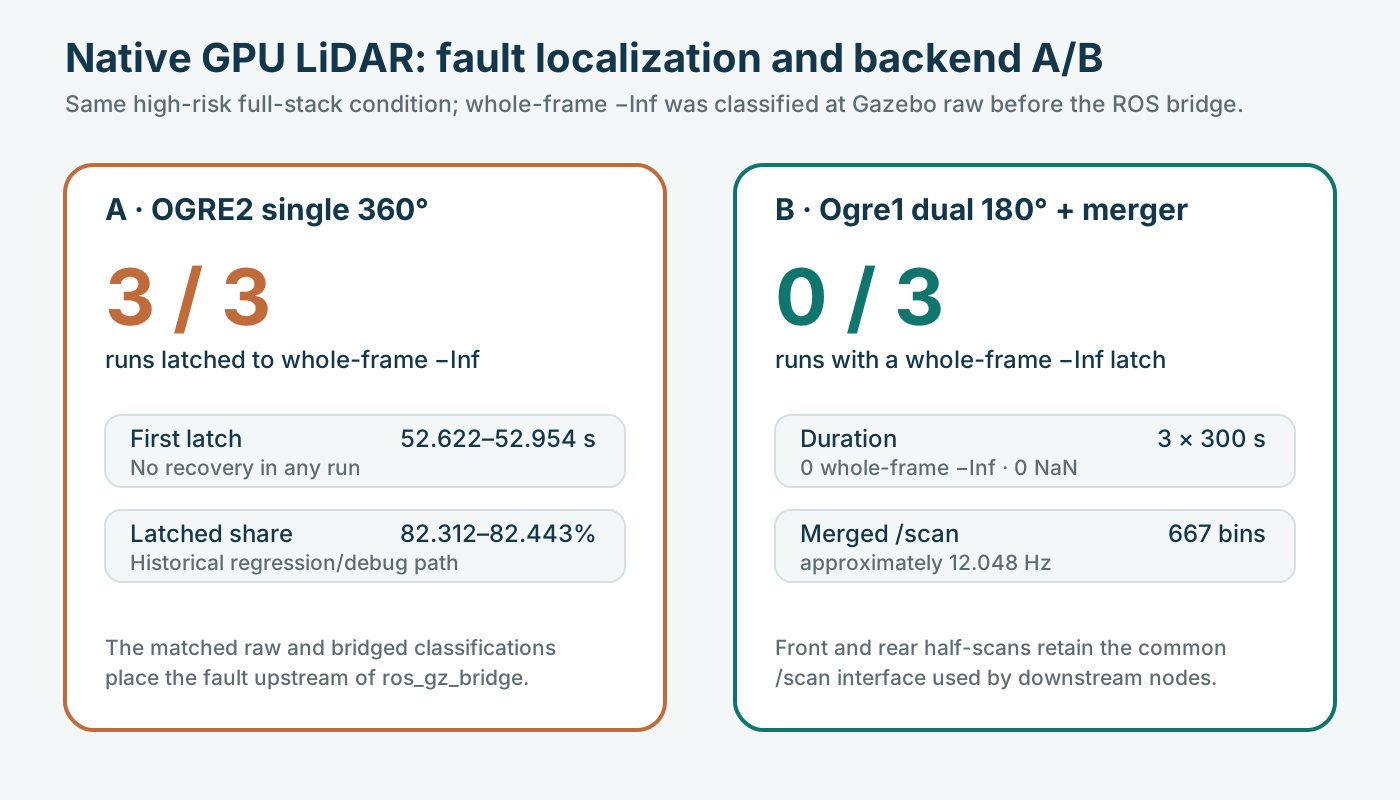
I traced recurring whole-frame -Inf scans to raw Gazebo output before the ROS bridge. In three 300 s runs per condition, the historical OGRE2 single-360° path latched in all three; the Ogre1 dual-180° alternative recorded zero whole-frame -Inf frames and zero NaNs.
Command authority and alternative modes
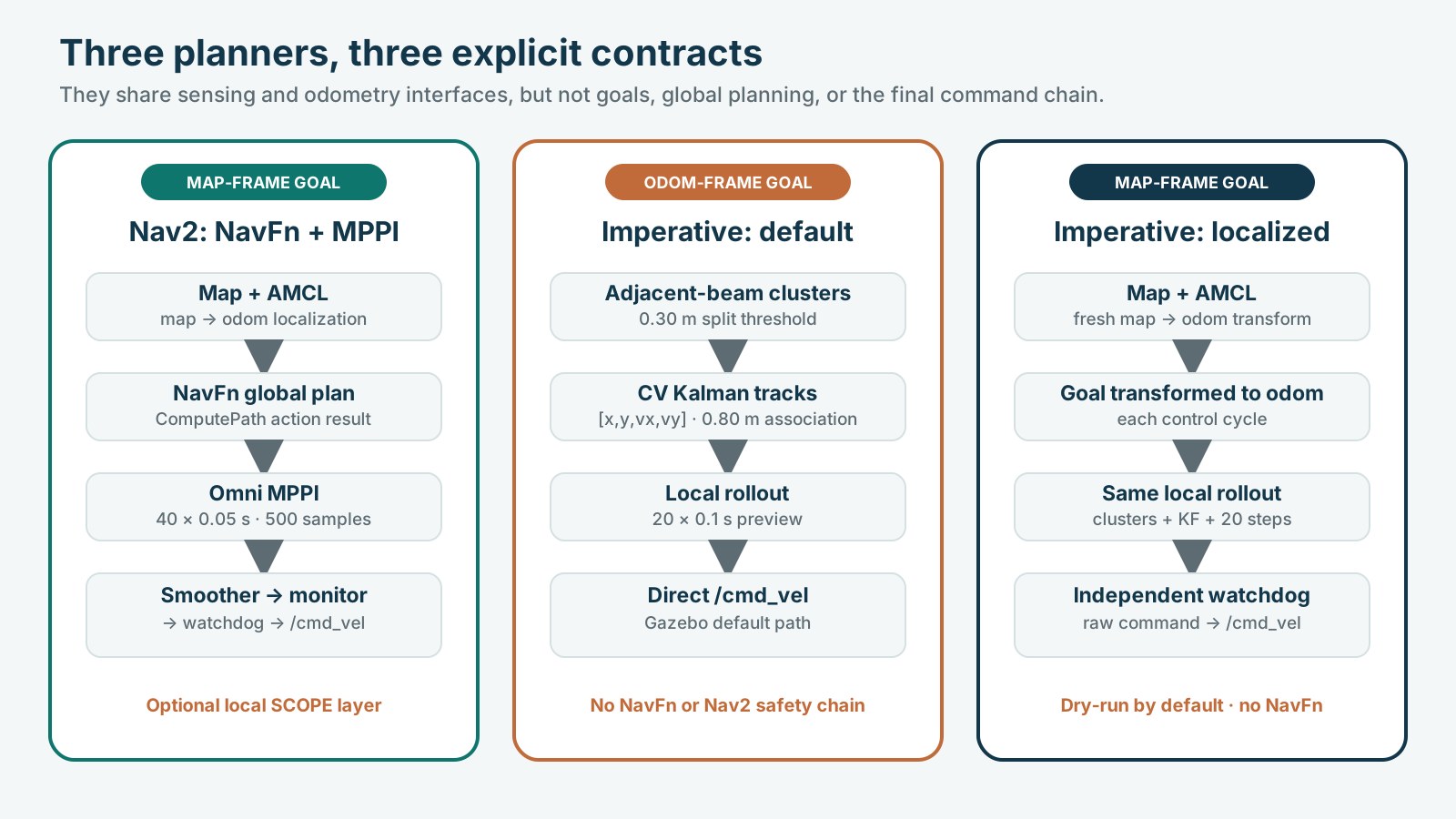
I inspected the final command publisher rather than inferring actuation from a healthy controller topic. The Nav2 chain ends at the watchdog; default Imperative publishes directly to /cmd_vel, while localized Imperative uses its own watchdog. The modes run separately.
Odometry and ground truth
The slip simulator separates ground-truth pose from the odometry supplied to localization and control. This makes odometry error an explicit test condition rather than silently giving the planner simulator truth.
Scope & Next Experiments
The bag-specific prediction study and single navigation pair do not establish generalized navigation performance. Matching a seed, start, and goal does not freeze obstacle timing, scheduling, or inference latency; similar minimum scan distances are not a safety margin or collision-rate estimate.
Gazebo remains the primary evaluation environment. Hardware bringup has not replicated the full simulation benchmark. The current firmware source is host-tested, but its changes have not been built with Keil/ARM or validated on physical M1 hardware, so the firmware diagrams do not imply physical closed-loop accuracy or a completed end-to-end hardware loop.
Next experiments will repeat matched scenarios across seeds and goals, control obstacle timing, and vary one fusion factor at a time—risk mapping, uncertainty weighting, inflation, or prediction age. The newer local-guidance path requires its own controlled comparisons. SCOPE remains frozen and zero-shot; the results currently support an experimentation platform and specific engineering findings.